
 EN
EN


Why Diesel Fuel Delivers Superior Energy Density and Thermal Efficiency
Higher energy density per liter: longer range and reduced refueling frequency
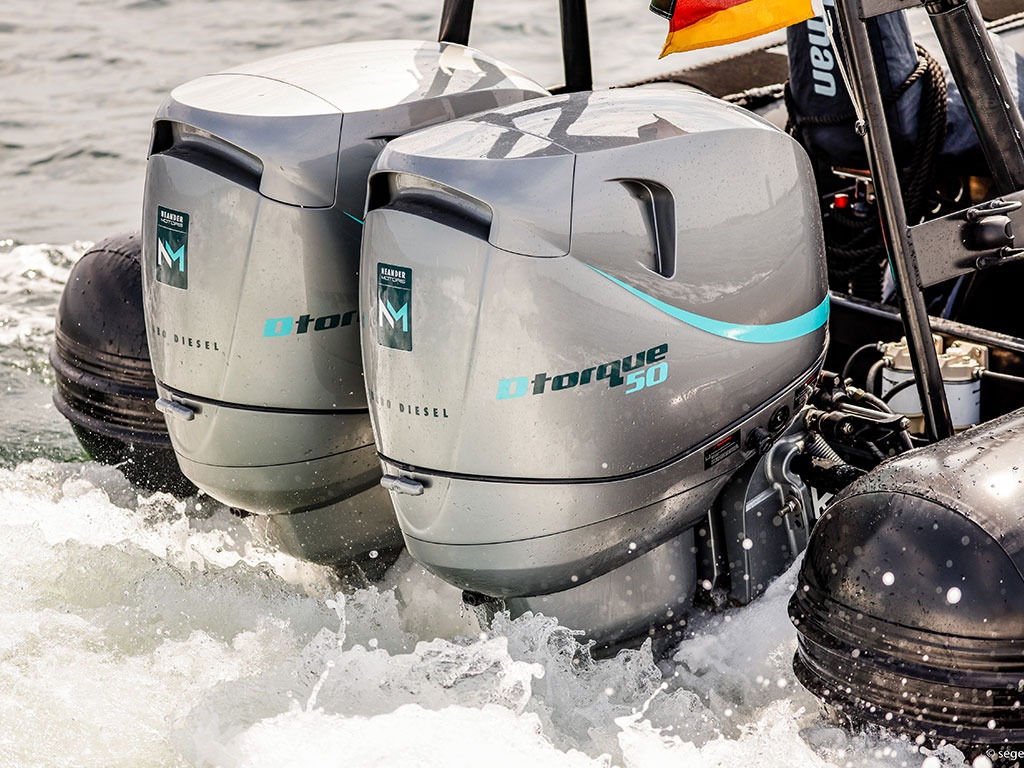
Diesel fuel contains roughly 10–15% more energy per liter than gasoline—approximately 35.8 MJ/L versus 32.4 MJ/L for typical marine-grade fuels. This higher energy density, combined with the greater thermal efficiency of diesel engines (40–50% versus 35% for gasoline), delivers significantly longer range from the same tank volume. For commercial operators—such as fishing fleets, aquaculture support vessels, and coastal patrol units—this means extended time on station and fewer refueling interruptions, directly enhancing operational flexibility and mission readiness.
Compression ignition and lean-burn combustion: how diesel outboard engines extract more work per unit of fuel
Diesel outboards rely on compression ignition, compressing air to ratios of 16:1 to 18:1—nearly double that of gasoline engines. This high compression raises air temperature sufficiently to ignite injected fuel spontaneously, enabling unthrottled, lean-burn combustion. Without a throttle plate, pumping losses are eliminated; with a higher expansion ratio, more mechanical work is extracted from each combustion event. As a result, diesel outboards achieve a 20–35% improvement in fuel economy across typical marine duty cycles—especially under steady-state operation—making them especially well-suited for applications prioritizing endurance and efficiency.
Diesel Outboard vs Gasoline Outboard: Quantifying the Fuel Economy Gap
Real-world marine test data: 25–40% lower fuel consumption across common operating conditions
Independent marine trials—including those conducted by the U.S. Coast Guard Auxiliary and the International Council on Clean Transportation—confirm that diesel outboards consume 25–40% less fuel than comparable gasoline models under identical load, speed, and sea conditions. At sustained cruising speeds typical of day trips or light commercial use (e.g., 6–12 knots for displacement hulls or 20–25 knots for semi-planing patrol craft), a diesel outboard may burn just 3–4 gallons per hour, while an equivalent gasoline unit consumes 5–6 gallons. Though stop-and-go operation narrows the gap, diesel retains a consistent advantage—even at partial load—due to its efficient lean-burn characteristics and minimal throttling losses.
How displacement hulls, sustained cruising speeds, and high-load operation widen the efficiency advantage
The diesel efficiency advantage intensifies under conditions aligned with its design strengths. Displacement-hull vessels operate most efficiently at steady, low-to-mid RPMs—precisely where diesel engines deliver peak torque and lowest brake-specific fuel consumption (BSFC). Sustained cruising—whether at economical speeds for fishing or higher-speed transits for patrol—keeps the engine within this optimal band. High-load scenarios—such as pushing through headwinds, carrying heavy payloads, or powering auxiliary systems—further widen the gap: diesel engines maintain efficiency under load far better than spark-ignited gasoline engines, whose volumetric efficiency and combustion stability decline more sharply as demand increases. Commercial operators running long, predictable shifts realize the largest real-world savings—often exceeding 30% annually in fuel spend.
Commercial Use Cases Where Diesel Outboard Fuel Efficiency Drives Tangible ROI
Long-duration missions: commercial fishing, aquaculture support, and coastal patrol applications
For vessels operating extended hours—particularly multi-day fishing trips, inter-farm aquaculture shuttles, or 24/7 coastal patrol—the fuel economy of diesel outboards translates directly into measurable return on investment. A commercial fishing vessel logging 800 annual operating hours can save $3,000–$7,000 per season in fuel alone, assuming current marine diesel and gasoline prices. Aquaculture support boats benefit not only from lower consumption but also from greater range—reducing refueling logistics across remote farm clusters. Patrol agencies gain mission-critical endurance: diesel’s high low-end torque enables efficient loitering, pursuit, and maneuvering under full equipment load, while extended runtime between refuels supports longer search-and-rescue windows. Over a 10-year service life, cumulative fuel savings, coupled with longer service intervals and proven durability, reduce total cost of ownership by up to 25% compared to gasoline alternatives.
Barriers to Wider Adoption of Diesel Outboard Motors
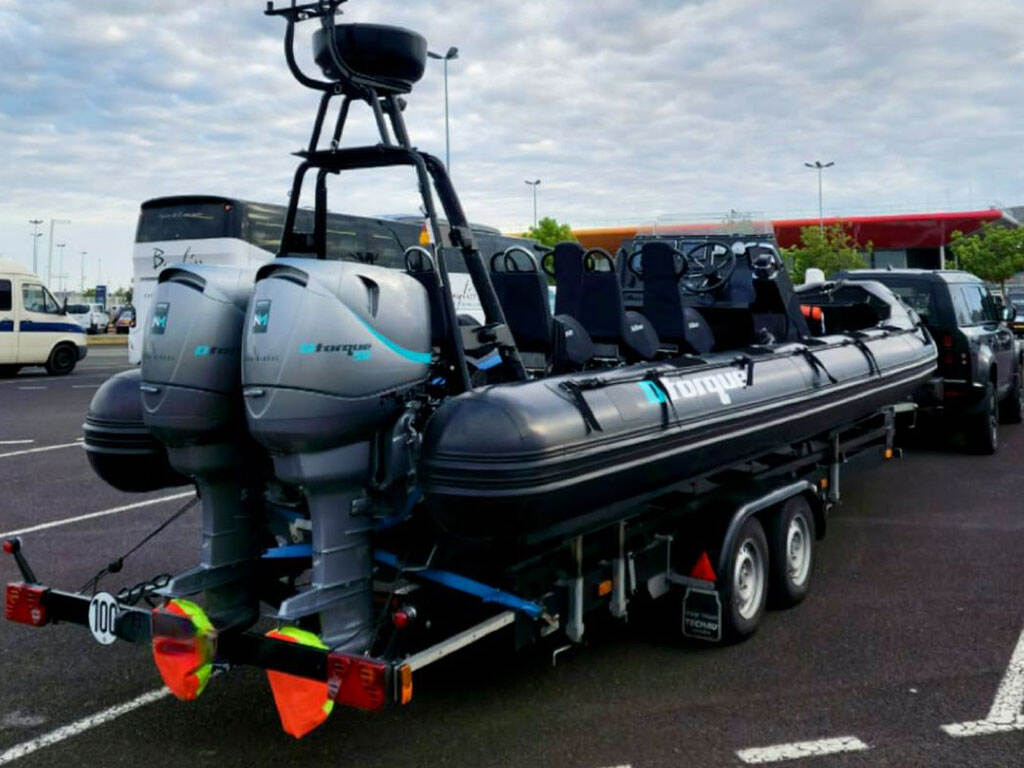
Despite clear efficiency gains, several practical barriers limit broader adoption. Weight remains a key constraint—diesel outboards are typically 20–35% heavier than gasoline equivalents, requiring reinforced transoms and affecting handling on smaller or planing hulls. Upfront cost is another hurdle: diesel units often carry a 20–30% price premium, challenging budget-conscious buyers despite long-term fuel and maintenance savings. Cold-start performance, though improved with modern glow-plug systems and fuel heaters, still lags in sub-freezing conditions—particularly below 0°C—where ignition delay and white smoke can affect reliability. Finally, service infrastructure is sparse: unlike the extensive network supporting gasoline outboards, certified diesel marine technicians and parts availability remain limited outside major ports and coastal hubs. For operators in remote or seasonal markets, this scarcity increases downtime risk—a critical consideration when evaluating ROI beyond fuel alone.