
 EN


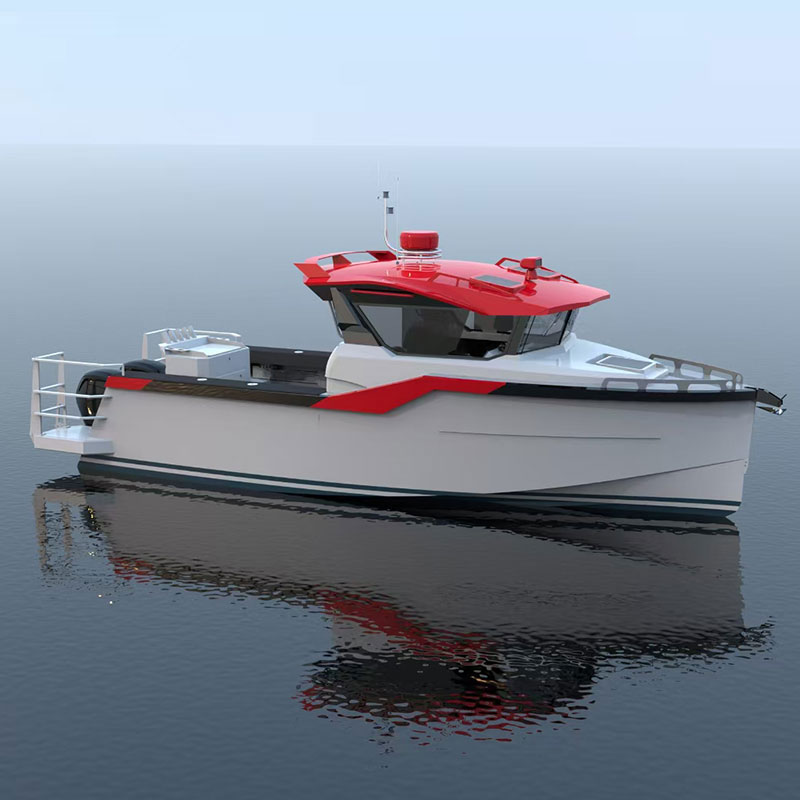
Operating in the offshore energy, commercial towing, and marine construction sectors means pushing equipment to its absolute limits. Out on the open ocean, vessels face a relentless barrage of saltwater corrosion, violent wave impacts, and grueling day-and-night work schedules. Working closely alongside port authorities and commercial fleet managers across international maritime hubs shows time and again that standard recreational hulls simply cannot survive the brutal demands of industrial marine service. When offshore enterprises look to expand or upgrade their commercial fleet, investing in a heavy-duty workboat built with rugged construction is not merely a preference—it is a mandatory foundation for operational safety, crew security, and long-term commercial survival.
Surviving Extreme Marine Environments and Impact Stress
The primary reason commercial operators demand rugged vessel construction is the sheer unpredictability of open-water operating conditions. Offshore tasks frequently involve maneuvering alongside massive oil platforms, handling heavy equipment in choppy waters, and executing high-impact personnel transfers. Based on hands-on harbor commissioning experiences, lightweight vessels subjected to cyclic wave slamming and accidental dock collisions suffer from rapid fatigue, cracked stringers, and structural compromise. Industrial-grade marine craft engineered with thick marine-grade aluminum plating, reinforced transverse framing, and heavy-duty fendering systems absorb and dissipate high-impact kinetic energy effortlessly, protecting both the hull structure and the crew onboard.
Combating Saltwater Corrosion and Reducing Maintenance Downtime
Marine corrosion is an aggressive, silent enemy that can prematurely destroy a commercial vessel if the underlying materials are flawed. Offshore companies operate in highly saline environments where galvanic action and humidity accelerate metal degradation. According to design guidelines published by international maritime classification societies regarding cathodic protection and marine alloy selection, choosing the correct alloy—such as corrosion-resistant aluminum—combined with advanced epoxy coating systems is critical. During long-term fleet audits, vessels featuring robust structural integrity and proper sacrificial anode configurations consistently demonstrate significantly lower corrosion rates, translating directly into fewer emergency dry-dock interventions and maximized operational uptime.
Maximizing Versatility for Heavy-Duty Offshore Missions
Modern offshore operations require vessels that can pivot effortlessly between multiple demanding roles, from towing and environmental cleanup to hydrographic surveying and equipment transport. A ruggedly built utility platform provides the structural backbone necessary to support heavy deck loads, hydraulic cranes, and specialized electronic tracking gear without experiencing structural flex. Experienced naval architects design these commercial vessels with reinforced transom assemblies, wide beam stability, and modular deck layouts. This structural adaptability allows offshore companies to reconfigure their vessels for specialized project requirements without risking stability or violating safety thresholds.
Optimizing Total Cost of Ownership Through Structural Durability
Budget-conscious corporate procurement teams occasionally fall into the trap of purchasing lightweight, cheaper vessels to minimize initial capital expenditure. However, seasoned commercial fleet directors understand that true economic value is defined by total cost of ownership over a multi-year operational lifespan. Industrial economic benchmarks demonstrate that a ruggedly constructed utility vessel drastically reduces recurring structural repair overheads and prevents premature vessel retirement. While a heavy-duty hull requires a higher initial investment, its prolonged service life and resistance to structural failure ensure a vastly superior return on investment for commercial operators.
Empowering Marine Operations Through Rugged Manufacturing Excellence
Ultimately, the performance reliability of any commercial fleet relies entirely on the engineering integrity and manufacturing expertise of the shipbuilder. This is precisely where industry specialists like Xsmarine distinguish themselves in the international maritime marketplace. By leveraging advanced hull fabrication techniques, rigorous multi-stage quality control protocols, and customized engineering solutions, Xsmarine builds exceptionally tough, reliable vessels tailored for the harshest offshore environments. An unwavering commitment to precision welding, structural resilience, and responsive client support ensures that every maritime enterprise secures a dependable workhorse. Partnering with Xsmarine elevates standard commercial procurement into a strategic asset that powers offshore success.
Table of Contents
- Surviving Extreme Marine Environments and Impact Stress
- Combating Saltwater Corrosion and Reducing Maintenance Downtime
- Maximizing Versatility for Heavy-Duty Offshore Missions
- Optimizing Total Cost of Ownership Through Structural Durability
- Empowering Marine Operations Through Rugged Manufacturing Excellence