
 EN
EN


Assess Your Vessel’s Power Requirements Based on Hull Type and Displacement
How hull design (planing, semi-displacement, displacement) dictates optimal diesel outboard torque and RPM profile
Hull physics fundamentally governs powerplant selection. Planing hulls demand peak horsepower at high RPM (3,500–5,500) to overcome hydrodynamic lift resistance—unsuited for conventional diesel outboards’ torque-biased profiles. Displacement hulls, by contrast, rely entirely on low-RPM thrust (1,200–2,200 RPM), where modern diesel outboards deliver 40% greater torque than comparable gasoline equivalents. Semi-displacement designs require dual optimization: sufficient torque below 2,500 RPM for displacement-mode efficiency, plus reserve horsepower for brief planing transitions. This explains why displacement and semi-displacement vessels achieve 20–35% better fuel economy with marine diesel engines when properly matched.
Vessel weight and displacement: calculating minimum continuous horsepower and low-end torque needs
Total displacement directly determines continuous horsepower requirements. Industry standards prescribe 0.025–0.04 hp per pound for displacement cruising—a 10,000 lb vessel thus needs 250–400 continuous horsepower. However, torque remains paramount for acceleration and wave resistance:
- Minimum torque threshold = (Displacement in tons × 25 lb-ft/ton) for displacement hulls
- Add 15% safety margin for auxiliary loads or rough seas
Neglecting torque at operating RPM risks chronic underpowering—a primary cause of diesel engine sooting and premature failure. For expedition vessels, ensure the chosen diesel outboard provides at least 85% of peak torque below 2,200 RPM, as marine propulsion systems rarely operate at maximum rated horsepower.
Match Diesel Outboard Specifications to Real-World Operating Demands
Selecting a diesel outboard requires aligning technical specifications with actual maritime conditions—not theoretical benchmarks. Overlooking real-world variables like load profiles or operational rhythms risks underpowered performance or excessive fuel consumption.
Horsepower-to-weight guidelines refined for modern diesel outboards (0.025–0.04 hp/lb by duty cycle)
For modern vessels, conventional horsepower (hp) metrics alone prove inadequate. Optimal ratios fall between 0.025–0.04 hp/lb, depending on duty cycle: light recreational use favors the lower end to conserve fuel during steady cruising, while commercial applications like prolonged towing demand ratios exceeding 0.03 hp/lb to sustain payloads without overstressing engines. This precision matching prevents premature wear while optimizing efficiency.
Why torque curve shape matters more than peak horsepower for docking, towing, and displacement-speed cruising
Peak horsepower reveals little about low-speed control—critical when maneuvering docks or pulling heavy nets. Diesel outboards excel here by generating 80% of maximum torque below 2,000 RPM, delivering immediate thrust without high revs. Contrast this with gasoline alternatives requiring higher RPMs for equivalent force, wasting fuel during low-speed tasks. A broad torque curve ensures responsive acceleration in displacement-mode cruising while maintaining quieter, vibration-free operation essential for prolonged voyages. Prioritizing torque delivery over headline horsepower translates to reduced refueling stops, extended engine longevity, and seamless handling across diverse marine scenarios.
Compare Fuel Efficiency, Reliability, and Technology in Today’s Diesel Outboard Engines
Common rail vs. mechanical injection: trade-offs in fuel efficiency, emissions compliance, and service accessibility
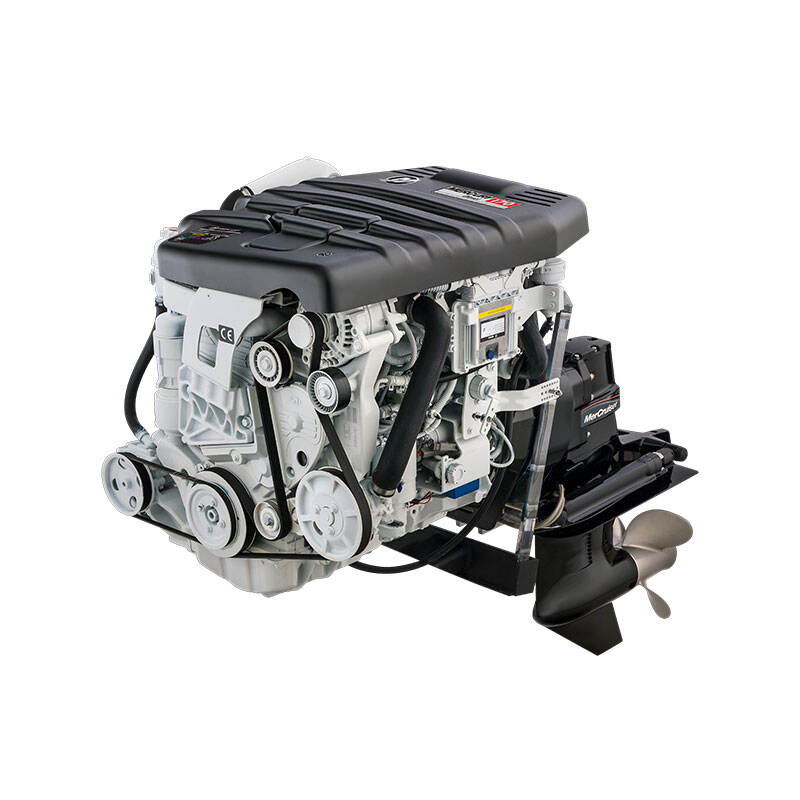
Modern diesel outboards achieve 20–35% greater fuel efficiency than gasoline counterparts, largely determined by injection technology. Common rail systems deliver precise fuel metering through high-pressure electronic control, optimizing combustion for 10–15% better fuel economy and near-zero particulate emissions. However, their complex components require specialized diagnostic tools for servicing. Mechanical injection systems offer simpler field maintenance using standard tools but sacrifice 8–12% in fuel efficiency and struggle with Tier 3 emissions standards. For displacement-hull vessels prioritizing range, common rail’s efficiency gains typically justify its technical complexity. Conversely, mechanical systems remain viable for remote operations where service infrastructure is limited.
Validate Compatibility and Installation Readiness for Your Diesel Outboard
Before finalizing your diesel outboard selection, rigorously assess installation feasibility. Measure physical dimensions against your vessel’s transom space, accounting for required clearance (typically 6–8 inches) around the engine cowling for airflow and maintenance access. Verify structural compatibility: transoms must withstand 20–40% greater torque loads than equivalent gasoline outboards due to diesel’s higher compression ratios. Evaluate electrical integration complexity—most modern diesel outboards demand dedicated battery banks with minimum 800–1,000 CCA (Cold Cranking Amps) and compatible wiring gauges to handle peak current draws during cold starts. Exhaust routing presents unique challenges; unlike gasoline engines, diesel outboards require water-lift mufflers and vertical risers to prevent backflow in swells. Finally, confirm local emissions regulations permit diesel marine installations in your operating waters, particularly within protected estuaries or freshwater lakes. Consult marine surveyors early to avoid costly retrofits—proactive validation ensures seamless commissioning.
Table of Contents
- Assess Your Vessel’s Power Requirements Based on Hull Type and Displacement
- Match Diesel Outboard Specifications to Real-World Operating Demands
- Compare Fuel Efficiency, Reliability, and Technology in Today’s Diesel Outboard Engines
- Validate Compatibility and Installation Readiness for Your Diesel Outboard