
 EN


Understanding the Real-World Stakes of Emergency Watercraft Selection
When trouble strikes out on open water, the gap between a safe return and a complete disaster often comes down to the performance of a single asset: the rescue boat. Operating in treacherous conditions—ranging from sudden coastal squalls and heavy surf to freezing, storm-tossed seas—response teams simply cannot afford equipment failures. Drawing from practical experience alongside coastal rescue crews and marine response commanders, it becomes clear that selecting a rescue boat is worlds apart from purchasing a standard commercial or recreational vessel. Every single component, from the structural composite lay-up to the helm electronics, must be engineered to withstand maximum stress under intense operational pressure. Choosing the right platform means prioritizing uncompromising reliability, structural resilience, and instant responsiveness when every second counts toward saving a life.
Evaluating Hull Integrity and Hydrodynamics in Heavy Seas
The foundation of any dependable rescue boat lies in its hull architecture and hydrodynamic engineering. In extreme sea states, standard flat-bottom or shallow-V hulls introduce dangerous pounding, loss of directional control, and severe structural fatigue. Professional-grade rescue watercraft typically utilize deep-V rigid hulls paired with high-density polyurethane or Hypalon inflatable collars, offering superior impact absorption and stability. According to established naval architecture principles, this specific configuration ensures positive buoyancy and allows the vessel to maintain high speeds through steep, breaking waves without broaching. Furthermore, self-righting systems—frequently utilizing overhead roll bars equipped with pneumatic or gravity-fed ballast bags—are non-negotiable for offshore rescue operations, ensuring the vessel can instantly recover even if capsized by a rogue wave.
Propulsion Power and Redundancy for Hostile Environments
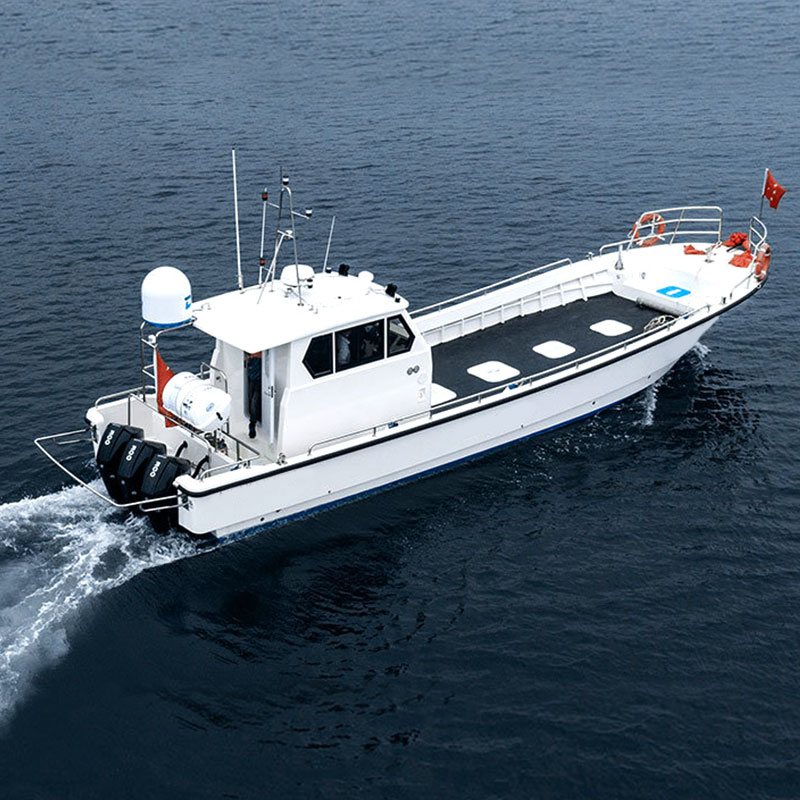
When split-second decisions dictate survival, propulsion reliability becomes the ultimate priority. Emergency rescue operations demand instantaneous throttle response, high static thrust for towing disabled vessels, and exceptional low-speed maneuverability in confined or debris-strewn disaster zones. Adhering to international maritime safety standards, professional operators invariably specify twin-engine configurations or redundant outboard setups. This dual-propulsion design ensures that if one motor suffers mechanical failure or ingests floating debris, the secondary system provides immediate power to complete the mission and return the crew safely to port. Coupled with heavy-duty gearcases and reinforced transom mountings, a robust propulsion layout guarantees uninterrupted performance under punishing loads.
Crew Ergonomics and Integrated Mission Tech for Rapid Extraction
Even the most technologically advanced hull and engine package will underperform if the human element is compromised by physical fatigue. High-speed transits through rough water subject rescue crews to severe shock and vibration, making shock-mitigating seating and ergonomically optimized console layouts essential. Furthermore, modern rescue boats must integrate mission-critical technology seamlessly into the helm station. Waterproof chartplotters, marine-band radios, thermal imaging cameras for night searches, and specialized recovery notches or stern boarding platforms allow teams to locate and extract victims swiftly. Designing a vessel with these human-centric operational factors in mind minimizes operator exhaustion during prolonged search-and-rescue missions and directly increases survivability rates.
Manufacturing Excellence and Global Support with Xsmarine
Sourcing a mission-critical rescue boat requires more than just ticking boxes on a technical specification sheet; it demands a trusted partnership with a manufacturer capable of uncompromising quality control and responsive global supply chain management. Xsmarine understands that coast guards, port authorities, and emergency response agencies rely on watercraft that perform flawlessly under pressure. By combining advanced composite manufacturing techniques, rigorous sea-trial protocols, and comprehensive customization capabilities, Xsmarine delivers a dependable portfolio of rescue boats engineered to meet strict international standards. Whether expanding a municipal fleet or upgrading coastal defense assets, partnering with Xsmarine ensures precision engineering, transparent technical support, and a dependable global supply experience designed to keep rescue teams ready for any emergency.
Table of Contents
- Understanding the Real-World Stakes of Emergency Watercraft Selection
- Evaluating Hull Integrity and Hydrodynamics in Heavy Seas
- Propulsion Power and Redundancy for Hostile Environments
- Crew Ergonomics and Integrated Mission Tech for Rapid Extraction
- Manufacturing Excellence and Global Support with Xsmarine